Showing posts with label sports. Show all posts

Saturday, 31 May 2014

While most of us can only dream of owning the fastest car in the world, some will do whatever it takes to possess one.
Here are 10 of the fastest street legal cars available in the market (production models, as opposed to concept or modified cars) these are tested, measured and verified top speeds (theoretical speeds do not count).
World's Fastest Cars:


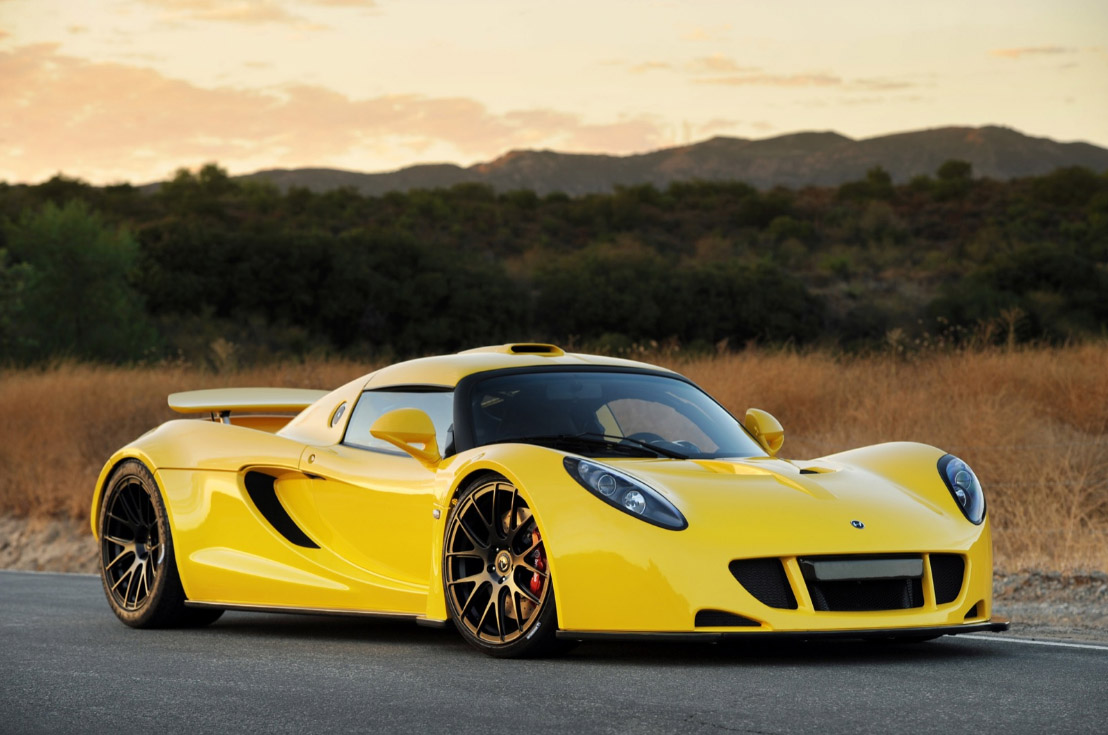
1. Hennessey Venom GT270 mph (435 km/h), 0-60 mph in 2.5 seconds, has a 7.0 liter LS7 Turbocharged V8 Twin Turbo V8 Engine producing 1244 hp, with a price tag of $1,000,000 and up. The Venom GT is the fastest car in the world when tested again on February 14th, 2014 at NASA runway in Florida. The track was only 3.22 miles long, thus limiting it top speed to 270 mph. Congratulations!
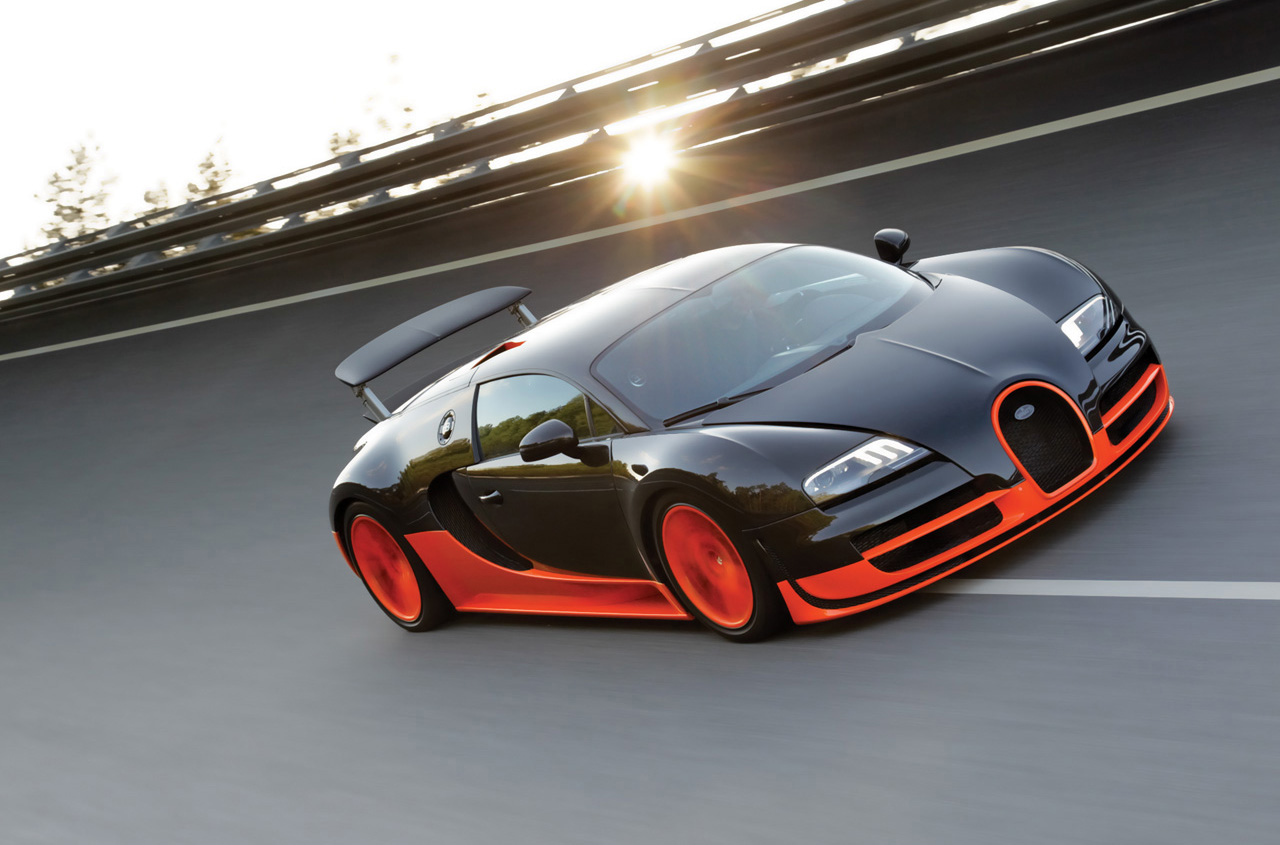
22. Bugatti Veyron Super Sport268 mph (431 km/h), 0-60 in 2.4 secs. Aluminum, Narrow Angle 8 Liter W16 Engine with 1200 hp, base price is $2,400,000. After being the fastest car in the world for over 3 years from July 10, 2010, it is now in 2nd place as of February 14, 2014. In the past, the Bugatti Veyron lost the title to SSC Ultimate Aero on March 2007. However, Bugatti challenged the record in Germany on July 10, 2010 with the new Super Sport and reclaimed the title of the fastest car in the world at 268 mph. The original Bugatti Veyron had a top speed of 253 mph, priced at $1,700,000 with 1001 hp.


3. Koenigsegg Agera R260 mph (418 km/h), 0-60 mph in 2.9 secs. 5.0-liter V8 Engine with twin turbo’s, housing 1099 hp. Base price is $1,600,000. If you're into snow sports, the Agera R can be fitted with a Ski Box as well as winter tires. While the Agera R has a massive theoretical top speed, the current tested top speed is 260 mph. Expect this snow car to be the Bugatti's arch enemy for the next 5 years.
4. SSC Ultimate Aero257 mph (413 km/h), 0-60 in 2.7 secs. Twin-Turbo V8 Engine with 1183 hp, base price is $654,400. Tested in March 2007 by Guinness World Records, The SSC Ultimate Aero was the fastest car in the world from March 2007 to July 2010. Shelby SuperCars will continue their quest to reclaim the fastest car title, and their new SSC Tuatura might do the job (we'll just have to wait).
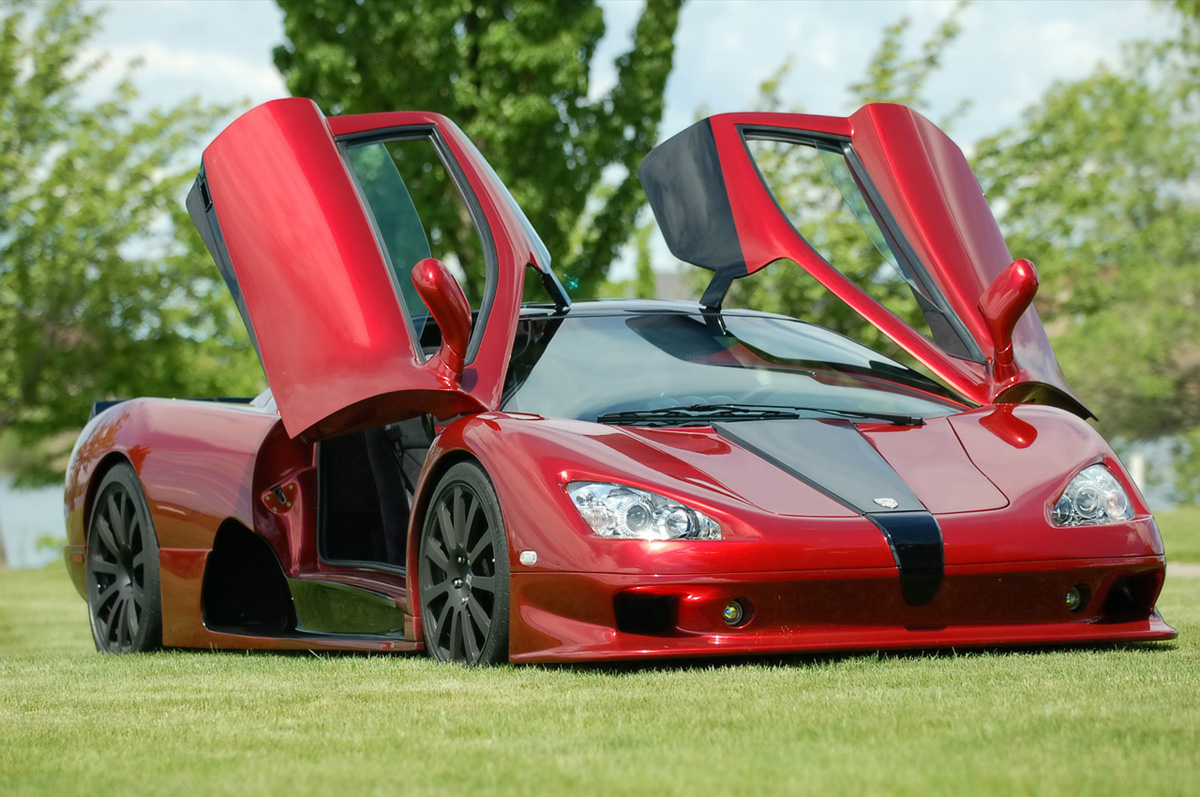
SSC Ultimate Aero Red doors open


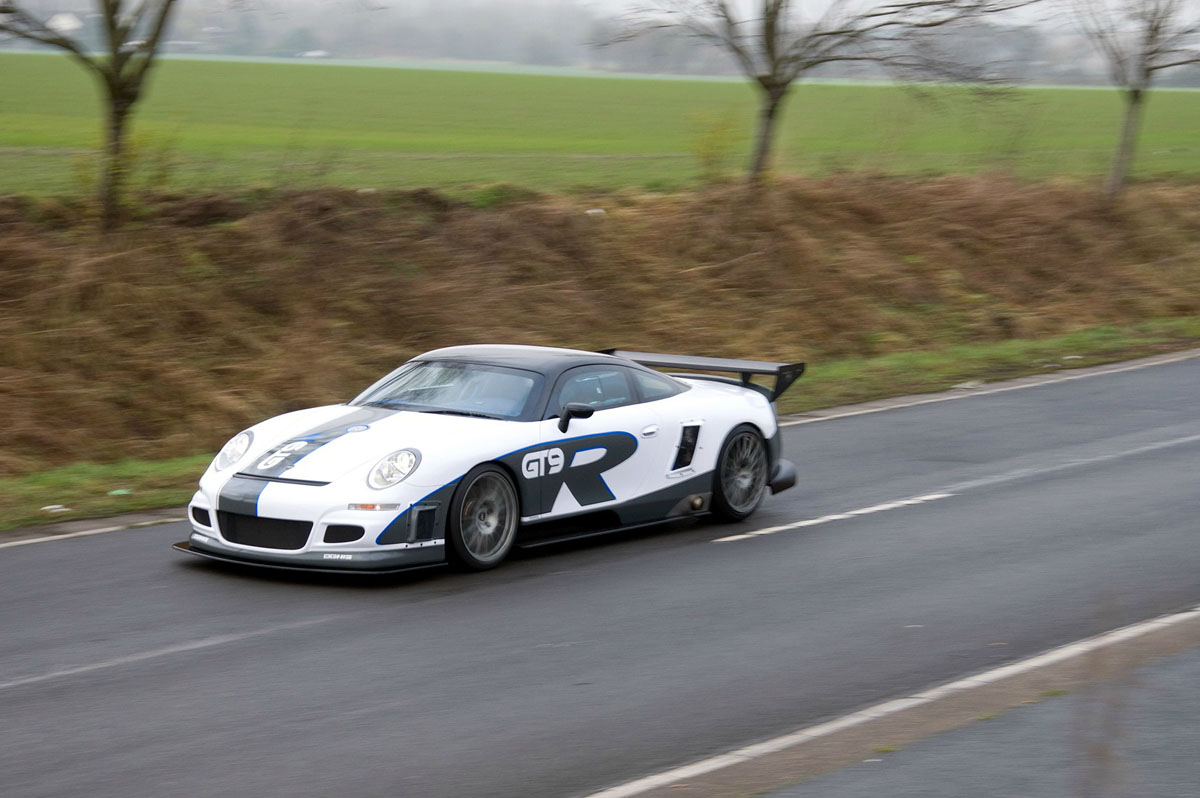
4. 9ff GT9-R: 257 mph (413 km/h), 0-60 in 2.9 secs. The 4.0 Liter flat-6 Twin-Turbo Engine with 1120 hp, comes with a base price of $695,000. Based on the Porsche 911, the 9ff GT9-R 1120 hp version is limited to 20 units and the exterior may be modified to suit the owner.


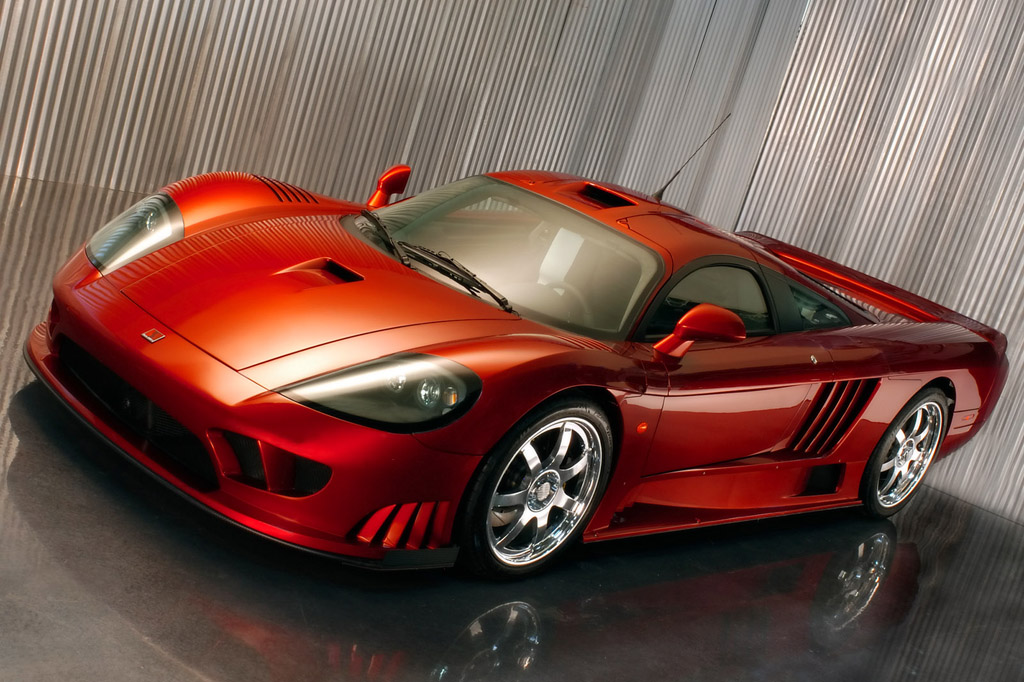
5. Saleen S7 Twin-Turbo: 248 mph (399 km/h), 0-60 in 2.8 secs. Twin Turbo All Aluminum V8 Engine with 750 hp, base price is $555,000. Smooth and bad-ass. It will make you want to show it off non-stop.
Saleen S7 Twin Turbo dark orange front view

6. Koenigsegg CCX245 mph (394 km/h), 0-60 in 3.2 secs. 90 Degree V8 Engine 806 hp, base price is $545,568. Made in Sweden, it is the older brother of the Agera R, only losing to 6 other supercars in the world.
Orange Koenigsegg CCX

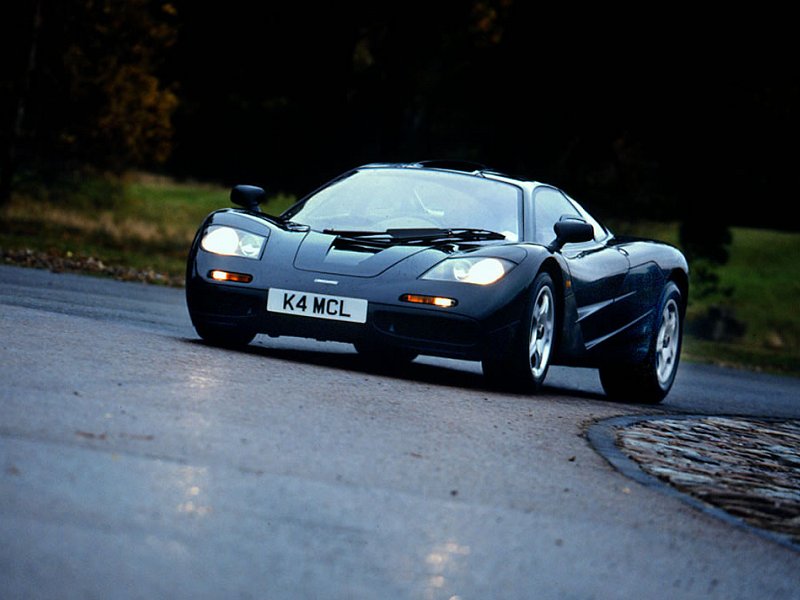
1997 McLaren F1 on the road black
7. McLaren F1240 mph (386 km/h), 0-60 in 3.2 secs. BMW S70/2 60 Degree V12 Engine with 627 hp, base price is $970,000. The fastest car in the 20th century with doors that looks like bat wings. Maybe Batman needs to order one and paint it black
8. Zenvo ST1: 233 mph (374 km/h), 0-60 in 2.9 secs. Twin-Charged 7.0 liter V8 Engine forging 1,104 hp. Base price: $1,225,000. The first Supercar from Zenvo Automotive, a Danish sports car company in pursuit of speed and perfection. This 100% Danish made supercar is limited to 15 units and the company even promised "flying doctors" to keep your baby functioning.
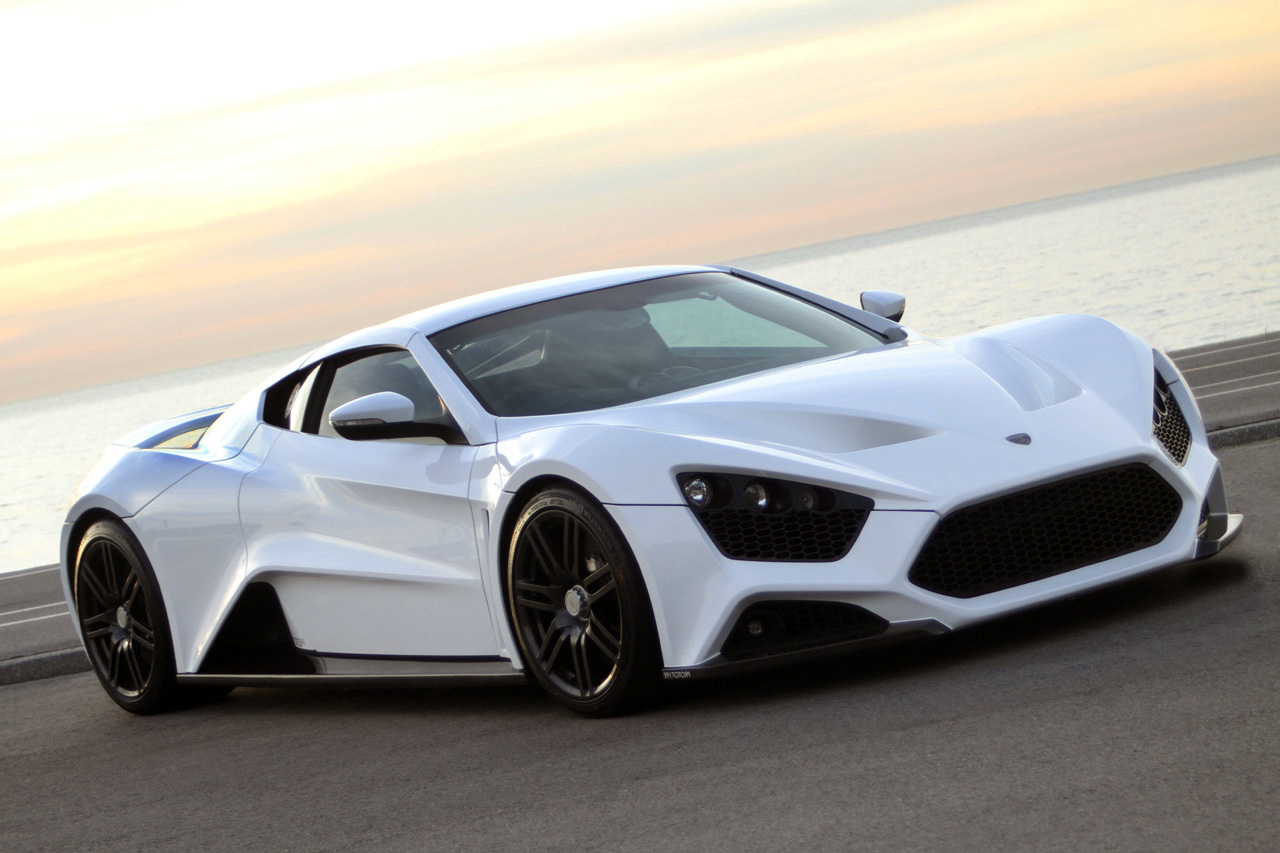
Danish supercar
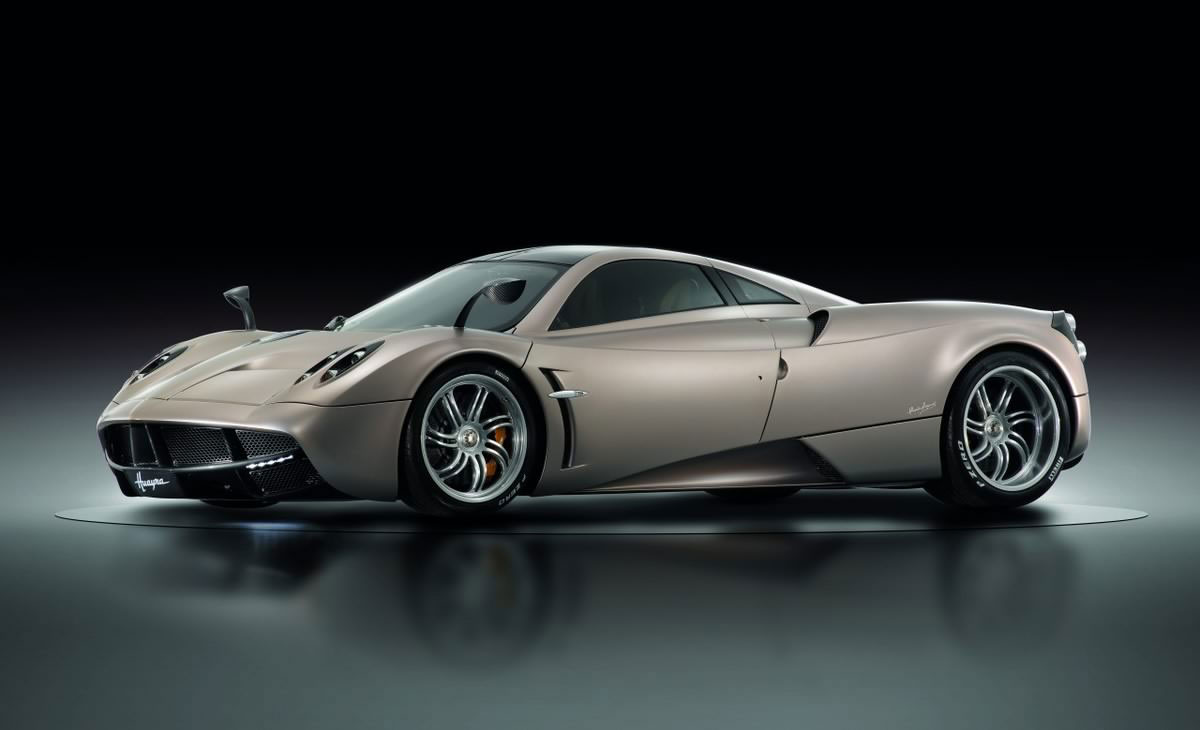
9. Pagani Huayra: 230 mph (370 km/h), 0-60 in 3.0 secs. Twin TurboCharged 6.0 liter V12 Engine from Mercedes AMG. It pumps out 720 horsepower to go with its 738 lb ft of torque. It comes with a seven speed auto-manual transmission. Pagani gives the name after the legendary Incan god of wind, Huayra-tata. The starting price is at £849,000, or $1,273,500.2013-Pagani-Huayra-in-studio-A
Two at 10th place at 225 mph.
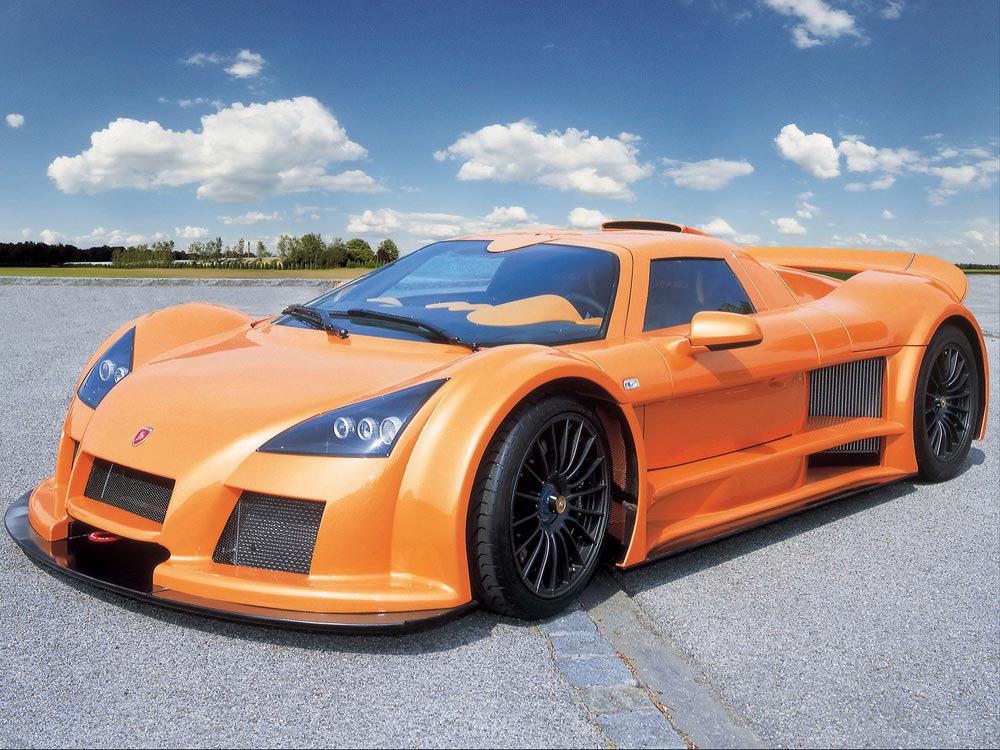
10. Gumpert Apollo225 mph (362 km/h), 0-60 in 3.0 secs, 4.2 liter V8 Engine that houses 650 hp. Base price: $450,000. Gumpert claims that the Apollo was designed such that it could drive upside-down in a tunnel with speeds at 190 mph or above. Of course, no one has tested this yet.
10. Noble M600225 mph (362 km/h), 0-60 in 3.7 secs. Twin-turbocharged 4.4-liter V8 Engine with 650 hp. Base price is $330,000. The Noble M600 also happens to be a very cool car. Its inconspicuous design sports a slender and contoured body which does not scream out for attention at every second of the d

Wednesday, 2 April 2014


In the world of sports there are few people whose jobs are as cherished as sports commentators. They are the ones who bring the world of sports and entertainment to our television sets, radios and other devices every day, and many of them are paid exceptionally well to do their jobs. The world of sports broadcasting has truly expanded, and as a result these people are being paid more than ever before. Not only that, but some of them have become just as popular as the athletes they cover.
According to the website Simply Hired, the average sports broadcaster made an annual salary of $59,000 in 2013. That’s considering commentators covering college and minor league games, all the way to big-time major league reporters. Some of todays well-known broadcasters earned their stripes the hard way, working through journalism and communications degrees and building experience until they made it to the big leagues. Others are simply retired athletes who are a shoe-in for the job because of their popular status and knowledge of the game. But regardless of where they came from or how they go there, here’s a look at the ten most valuable sports commentators in the world.

10. Don Cherry – $800,000 Per Year

Don Cherry
As an NHL commentator, Don Cherry has become one of the most notable figures not only in Canada, but in the hockey world in general. Cherry earned $800,000 for his work with CBC’s Hockey Night in Canada. His Coach’s Corner segment on the program has become a very popular part of the show. Cherry coached the Boston Bruins from 1974-79 after a successful career playing in the AHL.

9. Charles Barkley – $1.6 Million Per Year

Charles Barkley
While Charles Barkley earned $2.4 million in the 1992-93 NBA season as a player for the Phoenix Suns, he ended up earning $1.6 million in the 2012-13 season from his work at CBS and TNT where he covers college and professional basketball. His straightforward style has helped make him a popular figure in the world of basketball. Barkley’s playing career spanned from 1984-2000.

8. Mike Tirico – $3 Million Per Year

While Mike Tirico had earned about $1 million a year in the past with ESPN, he has been earning $3 million a year as the voice of the Monday Night Football broadcasts on the network. This is thanks to the program being the most popular show on cable or satellite television throughout much of the year.

7. Chris Berman – $3 Million Per Year


Chris Berman is a sportscaster from Connecticut with an estimated net worth of $18 million dollars. Chris Berman has been a sportscaster for 30 years and is considered the face of ESPN.
He has won the National Sportscaster of the Year Award from the National Sportscasters and Sportswriters Association six times and the Sportscaster of the Year Award from the American Sportscasters Association three times, among other honors.

6. Al Michaels – $5 Million Per Year

Detroit Lions v San Francisco 49ers


He has been in the business since the 1970s and is noted for calling the “Miracle on Ice” during the 1980 Winter Olympics. He has been an NFL announcer  for years and is often featured in Monday and Sunday Night Football games. Michaels has a net worth of $20 million.

5. Joe Buck – $5 Million Per Year

Joe Buck
The son of legendary St. Louis Cardinals broadcaster Jack Buck, Joe Buck currently covers national baseball and football broadcasts on the Fox network. He used to work for Cardinals games but has since hit the big time earning $5 million per year.

4. Jim Nantz – $5 Million Per Year

His  $15 million net worth comes largely from the fact that he has been repeatedly hired to cover many of CBS’s most important sporting events. He covers NFL games, NCAA tournament games and many golfing events including the Masters. He has essentially become the most prominent figure to work specifically for the CBS network.

3. Dan Patrick – $5 Million Per Yea

Dan Patrick
While Dan Patrick was one of the first employees at ESPN to earn $1 million thanks to his presence on the influential SportsCenter program, he had a tough split from the network and has since gotten his own nationally-syndicated radio show. He is also a host on NBC’s Sunday Night Football program. His net worth is close to $25 million.

2. Bob Costas – $5.5 Million Per Year

Bob Costas
Since he started covering the ABA’s Spirits of St. Louis in the 1970s, Bob Costas has brought his brand and trademarked style to the NBC network. For years he has covered programs for NBC  and has even worked with HBO. He is especially known for being a baseball expert, a part of what has helped him earn a net worth of $32 million.

1. Jim Rome – $30 Million Per Year

Jim Rome
As the host of what may be the most popular sports radio show in the world, Jim Romehas affiliates with hundreds of stations and has his own television show on the CBS Sports Network. He has also held individual shows with Fox and ESPN in the past. Today his net worth is close to $100 million in value but his $30 million annual salary for hosting his radio show has helped him reach the top of this list.

Monday, 31 March 2014


Photo: Race car on racetrack


The 24 Hours of Le Mans, France

Skill, speed, and stamina are the three s’s that mark the world’s best automobile race, the 24 Hours of Le Mans. The race, organized by Automobile Club de L’Ouest, bridges past and present on the automotive circuit.
The competition is set on a non-permanent track at Circuit de la Sarthe near the city of Le Mans on the Sarthe River. Roughly 46 cars start the race, in a series of classes that include prototype high-performance vehicles, dedicated race cars, and street cars. The diversity of autos gives the race a mix of old-fashioned and modern competitors. The winner is the car, driven by a team of three drivers, that covers the greatest distance in 24 hours.
The first Le Mans contest took place in May 1923; today it is held every June. The race begins at 4 p.m., and for 24 hours the sound of roaring engines fills 8 miles (13 kilometers) of French countryside.

The Olympic Games

It’s hard to imagine that Zeus and the other gods lording over ancient Greece ever envisioned the global event the modern Olympiad has become. For a two-week span, athletes from dozens of countries compete against each other in scores of different sports. And that’s just the Summer Games, which began their modern run in the late 1800s. The Winter Games, featuring sports that largely require snow and ice, draw a smaller field of competitors. But the competition for the gold, silver, and bronze is just as intense. Remember Tonya Harding and Nancy Kerrigan?
National rivalries are varied. Consider the United States hockey team winning the gold over the favored Soviets in 1980; Jamaica’s jubilant 1988 bobsled team overcoming long odds to win hearts, not medals; or Argentina beating America’s 2004 “Dream Team” and going on to capture the gold in basketball. Even the competition among national Olympic committees to host the games is fierce, with bribery accusations and investigations becoming, sadly, the norm in sports news over the last several years.
Still the games must go on; to be sure that they do, the International Olympic Committee decided to stagger the Winter and Summer Games. So during every even-numbered year, runners will bear the torch that eventually lights the Olympic flame somewhere in the world.

World Cup Soccer

Thirty-two nations play, but billions of people in countries all around the world drop everything they’re doing for a month every four years to see who claims the title of World Cup soccer champion.
The teams that compete in the World Cup finals are those that emerge from a series of qualifying rounds played out over the prior three years. The tournament of tournaments is therefore a showcase of the finest squads from across the continents and hemispheres.
It’s during the finals that the intense challenge begins. First, in a series of first-round games, each team plays the three rivals in its opening bracket. Teams get three points for each win, one point for a tie, and zero for a loss. The top two teams in the bracket then move on to the single-game elimination rounds, with victorious teams proceeding though quarterfinal and semifinal rounds before the final championship match.
All the while the world’s gaze is squarely fixed on the matches and the festival atmosphere in the stands. Chanting, singing, flag-waving, and superstitions are all part of the carnival that ensues.
Since the first World Cup tournament took place in 1930, the most dominant team has been Brazil. Winner of five championships since 1958, the greatest Brazilian teams were led by perhaps the most famous soccer player ever, Pele.
Rivalries are often fierce and deeply rooted: Two of the many in the sport are between England and Argentina, and one that has recently emerged between neighbors—Mexico and the United States.
4   The Super Bowl, United States
The Super Bowl is so big that even the commercials are worth watching. The first Super Bowl (held in January 1967) was played to plenty of empty seats and a waning TV audience. But now Super Bowl Sundays, progressively marked with Roman numerals, are the most celebrated one-game professional championship on the 12-month Gregorian calendar.
The Super Bowl concludes a 16-game regular season, and three postseason play-off rounds. It pits the top team from the American Football Conference against the top team from the National Football Conference for the coveted Vince Lombardi Trophy (not to mention diamond-studded rings for players, coaches, and front office “suits”). The Sunday evening spectacle is preceded by two weeks of parties and pre-game hype.

The National Basketball Association Finals, United States

The NBA Finals. Showtime and the “Ghosts of the Garden.” Rockets and Knicks, Spurs and Pistons. The National Basketball Association’s finals are a showdown of stars and teams for the ages. It takes four games to win, but at least 93 games to get there. And the teams that do bring a lot of glitter with them. Movie stars in front-row seats. Cheerleaders that resemble Las Vegas show girls in high-energy dance routines. The see-and-be-seen spectacle ringing the court is as intriguing as the game itself.
Pro basketball has changed radically over the last four decades. The three-point shot, the slam-dunk, a pendulum swing against defense makes NBA ball a high-scoring, acrobatic affair. What hasn’t changed is the prize, the right to be crowned world champion.

The Masters, United States

The green jacket. That’s all one has to say. The brainchild of legends Bobby Jones and Clifford Roberts, the first Masters was held in 1934. It was called Augusta National Invitation Tournament for the first five years of its existence before the name changed to what it is today. Unlike other sports championships and showcase events, the Masters remains steeped in tradition and continuity. The four-day stroke playing of 18 holes each day instead of the formerly customary 36 holes on the third day is still the rule.
Jones and Roberts left indelible images on the sport. But it was in the 1950s that legends and superstars took over the game. A pair of victories by Ben Hogan, and the first of four for Arnold Palmer made those two players the best known in America. The 1960s marked the arrival of the “Golden Bear,” Jack Nicklaus, who became the first Masters champion to repeat in consecutive years. Today, the average winning score is eight under par. The setting at the Augusta National Golf Club in Augusta, Georgia, provides a lush, southern scenery that is unmatched at courses around the world.
The green jacket. That’s all one has to say. The brainchild of legends Bobby Jones and Clifford Roberts, the first Masters was held in 1934. It was called Augusta National Invitation Tournament for the first five years of its existence before the name changed to what it is today. Unlike other sports championships and showcase events, the Masters remains steeped in tradition and continuity. The four-day stroke playing of 18 holes each day instead of the formerly customary 36 holes on the third day is still the rule.
Jones and Roberts left indelible images on the sport. But it was in the 1950s that legends and superstars took over the game. A pair of victories by Ben Hogan, and the first of four for Arnold Palmer made those two players the best known in America. The 1960s marked the arrival of the “Golden Bear,” Jack Nicklaus, who became the first Masters champion to repeat in consecutive years. Today, the average winning score is eight under par. The setting at the Augusta National Golf Club in Augusta, Georgia, provides a lush, southern scenery that is unmatched at courses around the world.

Polo at Palermo, Argentina

Argentine polo is considered the best in the world, and it’s no wonder the Argentine Open Championship is the top draw for the sport’s best players and most knowledgeable fans. The tournament, first known as the River Plata Polo Championship, takes place between late November and early December. First held in 1893, the tournament is older than the tango.
In 1923, the new Argentine Polo Association moved to the field in Palermo, where polo has been played ever since. The host country usually dominates, given that Argentines have dominated the sport since the end of World War II.
The Argentine Open is played in the Catedral, the grounds in the chic Palermo neighborhood of the capital city. The sport was introduced in Argentina by English ranchers, but it soon became the domain of the Argentine gauchos, cowboys, who were expert and skilled in a similar game called pato. Observers of modern global sport competitions insist that true polo aficionados must attend the Argentine Polo Open at least once in their lives.

Wimbledon, England

Center court. Grass surfaces. Strawberries and cream. What better way to spend a fortnight in old London Town? Wimbledon at the All England Lawn Tennis & Croquet Club. Located in southwest London, this grand spectacle is one of the four tennis tournaments that make up the grand slam.
Wimbledon is considered to be the most prestigious, largely because of its setting and surrounding pomp. It’s the only major tournament played on a natural turf surface.
Wimbledon has figured prominently in the history of tennis and in its development into the egalitarian and highly skilled sport that so many millions enjoy. Originally created in France during the 12th century, the sport took its modern form in Britain during the 1800s. In 1874, Walter Clopton Wingfield patented his game of lawn tennis in London, and three years later, Wimbledon, the first of the major tournaments, was created.
The setting at Wimbledon and its history only magnifies the match-ups on the grass courts. Connors versus Borg. Evert and Navratilova. Agassi and Sampras. Venus versus Serena. The winner on center court holds a trophy to show who has reached the mountaintop, and perhaps a number one ranking in the world tennis order.

World Series, United States

Home runs and chilly nights. Pitching duels and seventh-game thrillers. A century’s worth of the World Series has seen all that and much, much more. The Fall Classic is more than a sporting event; it’s a fixture on the American cultural landscape. Grandfathers and grandmothers remember Don Larsen’s perfect game in 1956. Fathers and mothers recall the amazing Mets of 1969. And sons and daughters have grown up with another New York Yankees dynasty.
To get to the series, each of the 32 teams in the major leagues must endure a 162-game season, followed by three playoff rounds. The first is a best-of-five series, followed by two best-of-seven series. The World Series engenders nostalgia, too, stretching from the hopeful days of April and spring, through the doggedly hot days of summer, before reaching the apex in the autumn winds of October, when heroics on the mound and in the batter’s box prove decisive.

The Grand National, England

Stamina and speed make the Grand National’s steeplechase the world’s most renowned horse race. First held in 1839, the three-day meet is held in Britain’s Aintree Racecourse in Liverpool. The Grand National pits as many as 40 horses against each other on a 4.5-mile (7-kilometer) course replete with obstacles.
The challenges presented by the steeplechase require the competing horses and jockeys to demonstrate a variety of riding skills. The horses and riders have to successfully jump a total of 30 fences, made more difficult by a six-foot-wide ditch on the take-off side. After the final fence is cleared, the first horse to reach the finish line in a 494-yard (451-meter) sprint wins the race.
The Grand National takes place every April, and captures the attention of Britain like no other event in the country’s sporting calendar. The first event, Opening Day, brings a crowd of 26,000 spectators to Aintree for the start of the racing cycle. The second day, known as Ladies Day, combines sport with fashion and is considered the highlight of northern England’s social season. The Grand National is held on the final day, completing the three-day extravaganza of sport and culture.


Subscribe to RSS Feed Follow me on Twitter!